
Not every blank can be fed from a coil. Thick plate, pre-cut sheets, and short bar stock resist coiling — and trying to force them into a coil-fed line is a mistake. When your material can’t be wound, you need a different feeding strategy: sheet feeding automation.
This guide explains when sheet feeding automation beats coil feeding, how an automatic sheet feeder works, and what to look for when choosing one. For background on the forming process, see Wikipedia’s stamping article.
When Sheet Feeding Automation Beats Coil Feeding
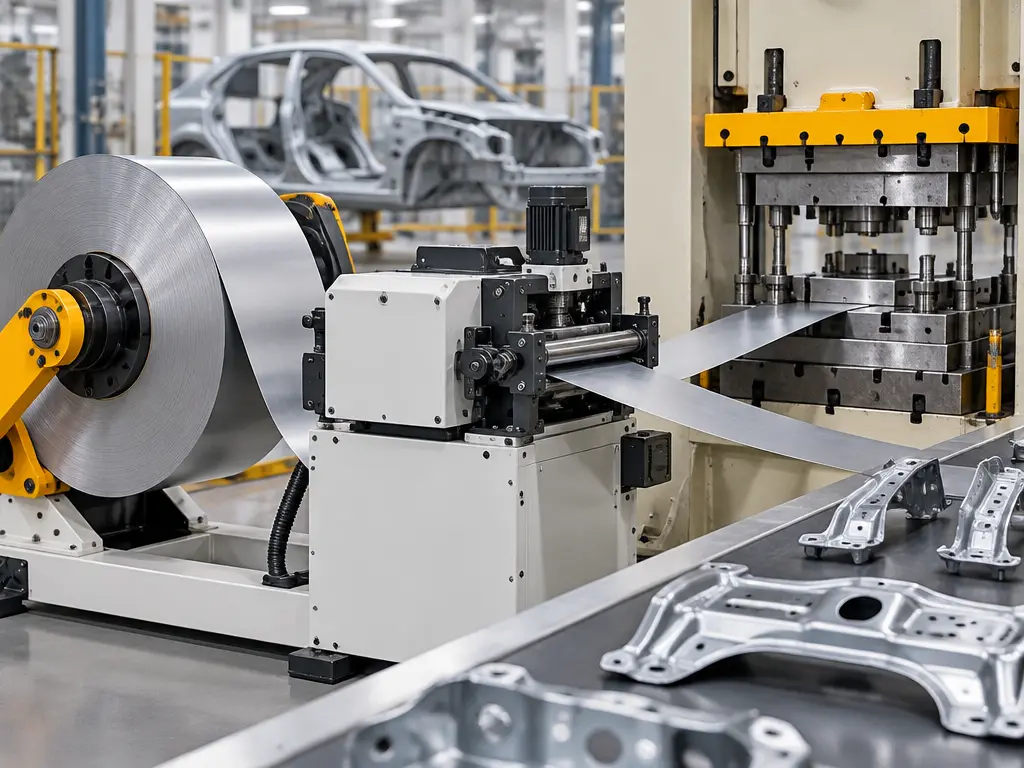
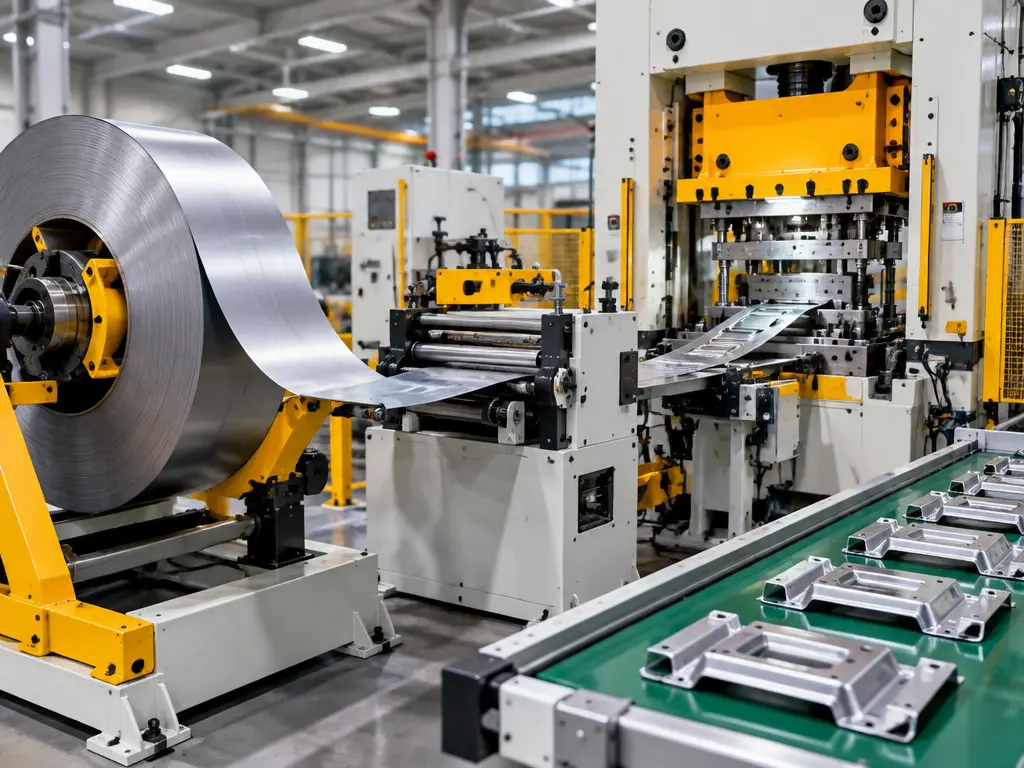
Coil-fed lines shine for high-volume progressive stamping of thin, narrow strip. However, a coil line has limits:
- Thick plate — beyond roughly 6mm, material becomes hard to wind and unwind cleanly
- Pre-cut blanks — sheets already sheared to size, where a coil adds no value
- Short bar stock — pieces too short or stiff to coil
- Low-to-medium volume — where coil setup and changeover cost outweigh the speed benefit
For these cases, a sheet feeder (also called a blank feeder) loads flat sheets or bars directly into the press — no coil, no straightener, no loop. In other words, sheet feeding automation is the right tool when the material says “don’t coil me.”
How Automatic Sheet Feeding Automation Works
A modern CNC sheet feeder runs a continuous cycle without manual handling:
Auto load → auto feed → stamp → receive → discharge → stack.
The sequence breaks down like this:
- Loading — sheets are placed in a lift-and-pick magazine or destacker
- Vacuum pickup — suction cups grasp a single sheet and place it on the feed table
- Servo feeding — a servo-driven mechanism pushes the sheet into the die on preset pitch
- Stamping — the press forms the part
- Receiving & stacking — finished parts are discharged and palletized automatically
The whole cycle runs unattended. One operator monitors the line instead of physically handling every blank. In fact, that single-operator economy is the core promise of sheet feeding automation.
Key Features That Matter
When you evaluate a sheet feeder, focus on these capabilities — each one directly affects whether your sheet feeding automation investment pays off:
| Feature | Why It Matters |
|---|---|
| Multi-axis servo linkage | Independent axes on left-right, lift, and forward-backward give precise, repeatable positioning |
| Vacuum single-sheet pickup | Grabs one blank at a time — essential for consistent feeding |
| PLC + touchscreen control | Intuitive setup, quick recipe changeover between part numbers |
| Adjustable stroke | Lets the machine match your blank dimensions and die layout |
| Auto stacking/discharge | Removes the second manual step after forming |
💡 Pro tip: Check the feeder’s maximum workpiece envelope — width, length, and thickness — against your largest blank. A feeder sized for thin sheet may not handle thick plate at the same dimensions. Consequently, sizing is where many sheet feeding automation projects go wrong before they even start.
Sheet Feeder vs. Blank Feeder: What’s the Difference?
The terms are often used interchangeably, but, in fact, the emphasis differs slightly:
- Sheet feeder — general term for feeding flat sheet material to a press or shear
- Blank feeder — emphasizes the loading-and-destacking function, taking pre-cut blanks from a stack
- CNC sheet feeder — highlights the servo-controlled, programmable feeding
In practice, Jingcui’s equipment covers all three — programmable servo feeding with automatic blank loading and stacking in one unit.
Matching a Sheet Feeder to Your Application
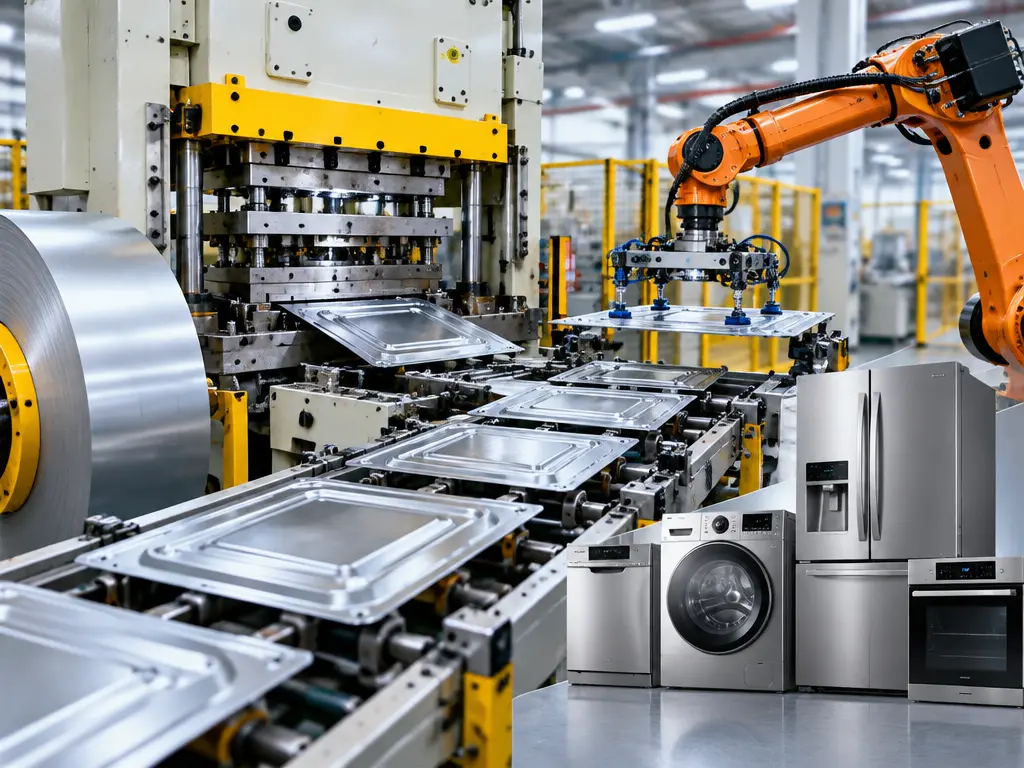
Different industries use sheet feeding for different reasons. For example, consider these use cases:
- Home appliance — thick panels, liners, and structural sheet metal that arrive pre-cut
- Automotive — brackets, seat components, and structural parts from thick plate
- Electronics — heatsinks and base plates cut from sheet stock
- Metal fabrication — general shearing and blanking of plate and bar
The common thread: material that can’t be coiled, and a shop that wants to remove manual blank handling.
Integrating Sheet Feeding into a Full Line
A sheet feeder is often one station in a wider automation setup:
- Upstream — pair it with a decoiler or straightener when some material still comes as coil
- Sheet feeding — the sheet feeder handles blanks directly; see our feeders category for the full range
- Downstream — add a handling robot to move finished parts or scrap
For blank-specific feeding, the PC-350 automatic blank feeder is Jingcui’s CNC sheet feeder for stamping presses — it loads, feeds, stamps, and stacks sheet and bar stock in one continuous cycle.
Why Automation Pays Off for Sheet Feeding
The business case for sheet feeding automation comes down to three things:
- Labor savings — one operator replaces manual blank handling
- Consistency — servo positioning feeds every blank the same, cutting rejects
- Safety — removing hands from the press area reduces injury risk
For shops upgrading thin-gauge coil lines to handle thick plate, or fabricators tired of hand-feeding, sheet feeding automation is usually the highest-ROI investment available.
Getting the Right Sheet Feeder
Every sheet application is different. Consequently, the right feeder depends on your blank size, thickness, material, and throughput. Send us your part drawing and material spec, and we’ll recommend the correct configuration.
Frequently Asked Questions
What is sheet feeding automation?
Sheet feeding automation uses a CNC sheet feeder (also called a blank feeder) to load flat sheets, pre-cut blanks, or short bars into a press automatically — no coil, no straightener, no manual handling. It’s the right choice when material can’t be coiled.
When should I use a sheet feeder instead of a coil feeder?
Use a sheet feeder for thick plate (roughly over 6mm), pre-cut blanks, short bar stock, or low-to-medium volume where coil setup isn’t worth it. Coil feeding wins for high-volume thin strip.
How does an automatic sheet feeder work?
It runs a continuous cycle — auto load, vacuum pickup, servo feed, stamp, receive, then stack — usually with one operator monitoring instead of manually handling every blank.
What’s the difference between a sheet feeder and a blank feeder?
The terms overlap. A sheet feeder is the general term; a blank feeder emphasizes destacking pre-cut blanks; a CNC sheet feeder highlights servo-controlled programmable feeding. Jingcui’s equipment covers all three.
Can sheet feeding integrate into a full stamping line?
Yes. It can pair with a decoiler or straightener upstream and a handling robot downstream. For coil-based lines, see our stamping automation line guide.
Ready to automate your sheet and bar stock feeding?
Contact Jingcui Automation with your blank dimensions and material. We’ll match a sheet feeder to your press and application.
📞 WhatsApp: +86 133 6064 4989 | 📧 simon@jingcuiautomation.com | 🌐 jingcuiautomation.com


Leave a Reply