
Table of Content
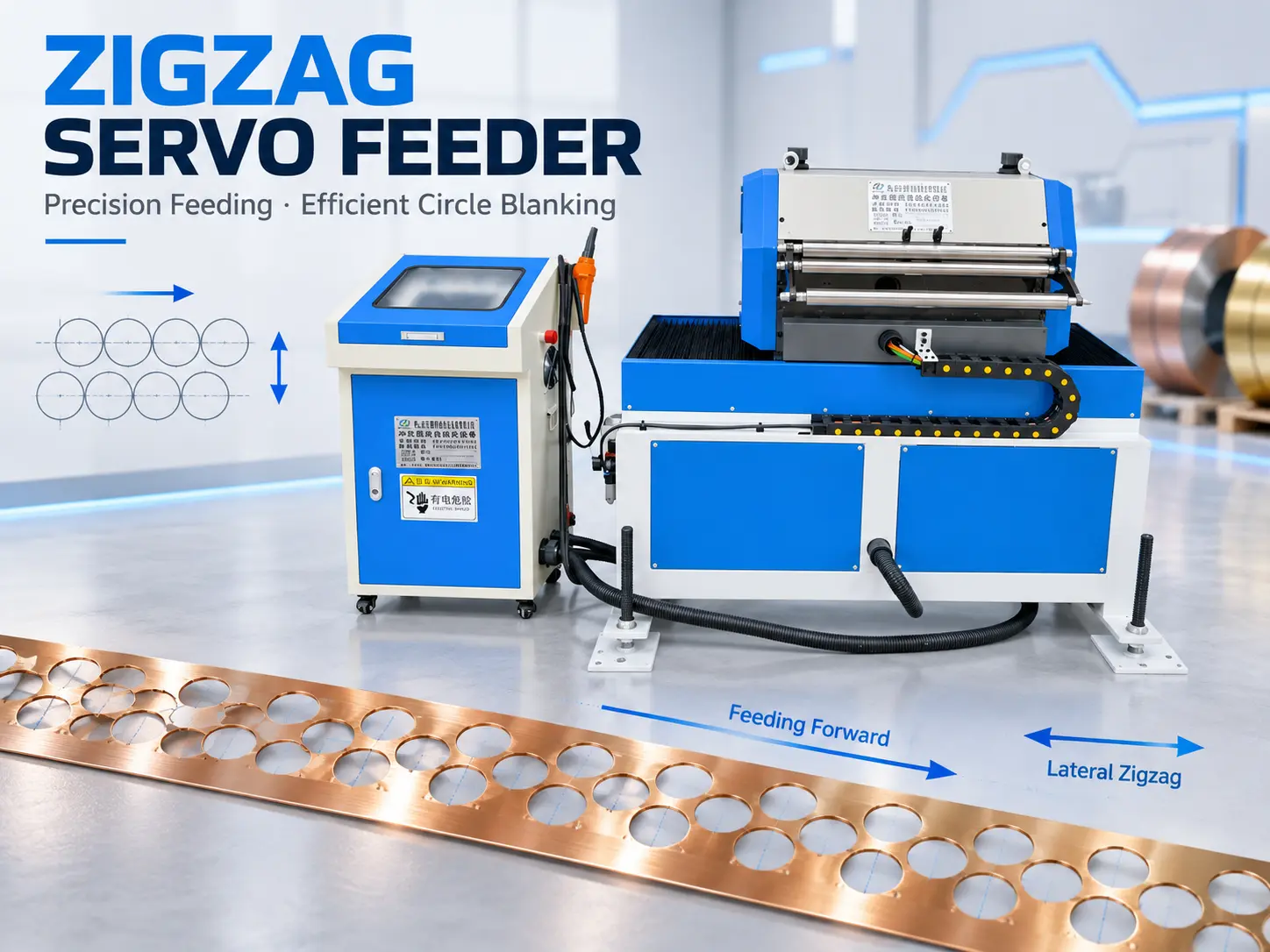
A zigzag servo feeder cuts scrap on circle blanking by oscillating the strip left and right, nesting each round blank into the gap left by the last one — instead of blanking circles in a straight line. It combines a servo-driven roller feeder with an independent oscillating box, so successive blanks interlock on the strip rather than leaving dead material between them. If you blank round or near-round parts in volume, this is usually the fastest way to lower material cost, because scrap — not press cycle time — is what drives the part.
For background on the feeding family, see stamping on Wikipedia.
zigzag servo feeder circle blanking material savingWhat a zigzag servo feeder does
Think of it as two machines sharing one job. The zigzag servo feeder has:
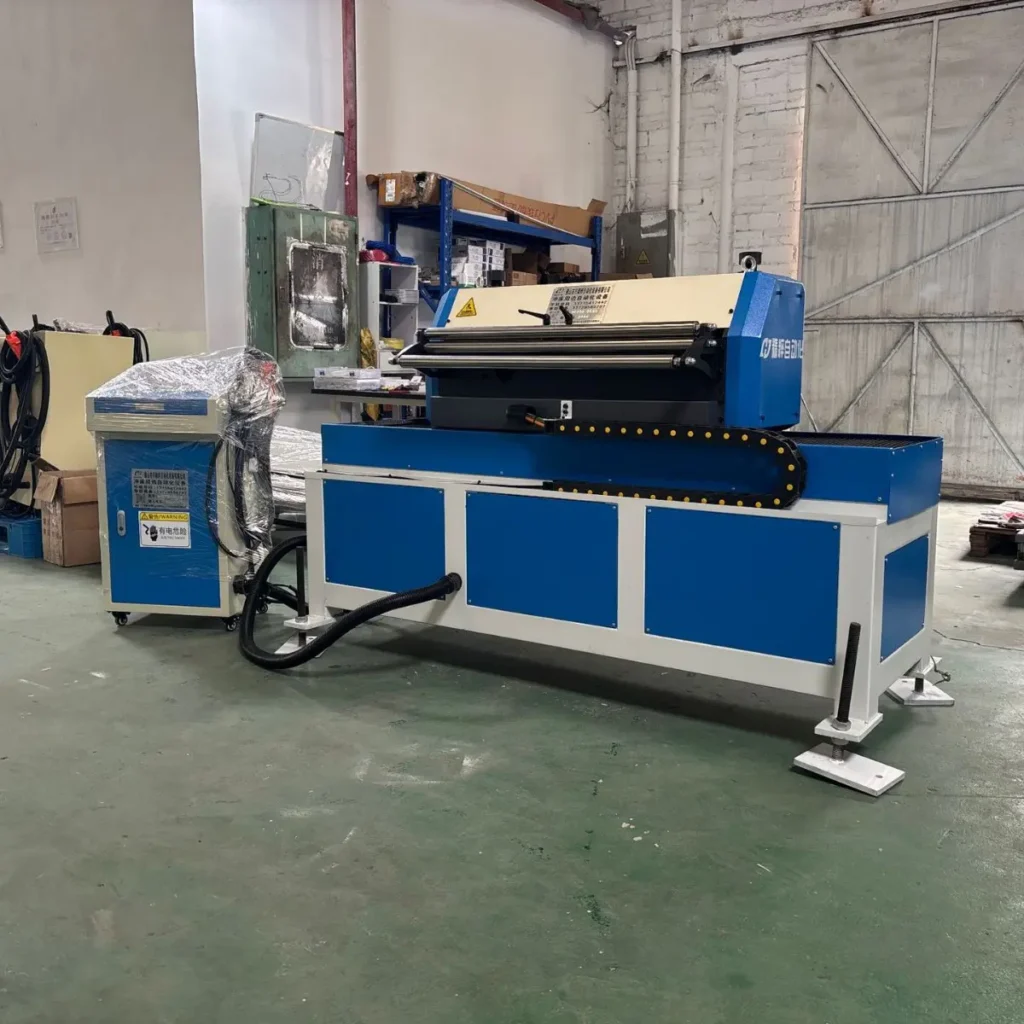
- The roller feeder (main body) — a servo-driven, closed-loop unit that feeds coil forward through hard-chrome rollers, with programmable feed length and manual speed settings.
- The oscillating box (add-on) — a traverse mechanism that shifts the strip side to side on the X-axis, so each blank nests into the previous one’s gap instead of lining up in a straight row.
In other words, the feeder controls forward pitch while the oscillation box controls lateral offset — the two together create the interlocking blank pattern that saves material.
Why circle blanking wastes so much material
Blank circles in a straight line and you’re throwing away the space between them. For example, a round blank fed straight leaves curved voids on both sides of every part — material that becomes scrap the moment the die closes. A zigzag servo feeder recovers that space by staggering the blanks, so the waste area shrinks dramatically.
Specifically, the savings multiply with three conditions:
- Round or near-round parts — the nesting geometry that makes oscillation pay
- Expensive strip — copper, brass and coated material where a few percent is real money
- High volume — where saved material over millions of parts outweighs the machine cost many times over
Key specs to check on a zigzag servo feeder
When you’re evaluating a zigzag servo feeder, the numbers that decide whether it fits are:
- Material width — the strip width the unit accepts, which caps your blank diameter
- Feed length — the programmable pitch, which must cover blank pitch plus oscillation offset
- Servo motor size — needs enough torque for your strip gauge at your target strokes per minute
- Oscillation stroke — the lateral travel, which sets how tightly blanks nest
One honest caveat: the oscillation module’s exact stroke and material-saving rate vary by application, so confirm them against your specific blank geometry rather than assuming a universal percentage.
How it fits a stamping line
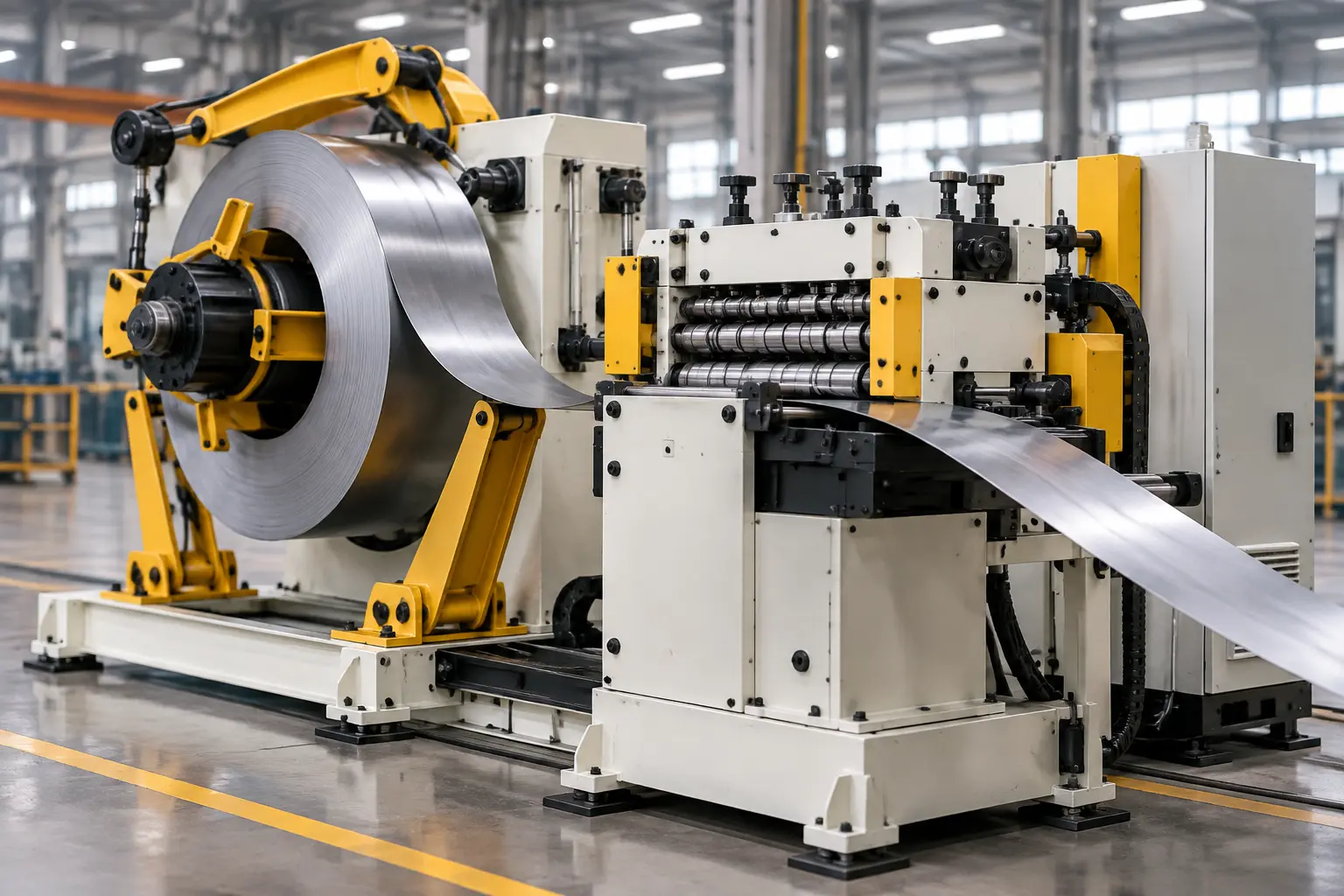
A zigzag servo feeder normally sits after the decoiler and straightener, feeding the press that does the blanking. The decoiler pays off coil, the straightener levels it, and the zigzag feeder positions it in a nested pattern. See our coil leveler guide and NC servo feeder buying guide for the surrounding stations.
The NCF series builds this as a roller feeder plus an independent oscillating box, so you can add zigzag capability to an existing setup rather than replacing the whole line.
Zigzag servo feeder vs. straight-line feeding
The difference comes down to material utilization, not speed. A straight-line feeder keeps every blank the same lateral position; a zigzag servo feeder offsets them so they interlock. For high-value or high-volume round parts, that single change is often the difference between a profitable run and one that bleeds scrap.
Frequently Asked Questions
A zigzag servo feeder oscillates strip left and right while feeding, nesting round blanks together to save material on circle blanking instead of leaving scrap between them.
The saving depends on blank diameter, pitch and oscillation stroke, so there’s no universal percentage. Confirm the number against your blank geometry with the manufacturer before buying.
It earns its keep on round or near-round parts where lateral nesting makes sense. Rectangular blanks that already pack tightly gain little from oscillation.
Yes — the NCF series pairs a roller feeder with an independent oscillating box, so you can add the lateral module to a current feeding setup.
It depends on the roller feeder it’s paired with. Match the servo motor and roller capacity to your strip gauge and width.
Ready to see if a zigzag feeder cuts your blanking scrap?
Contact Jingcui Automation for a free configuration review. Send your blank diameter, material, strip width and volume — we’ll recommend the right NCF setup and estimate the material you can save.
📞 WhatsApp: +86 133 6064 4989


 English
 Русский
 ไทย
 Tiếng Việt
 Español de México
 العربية
Deja un comentario