
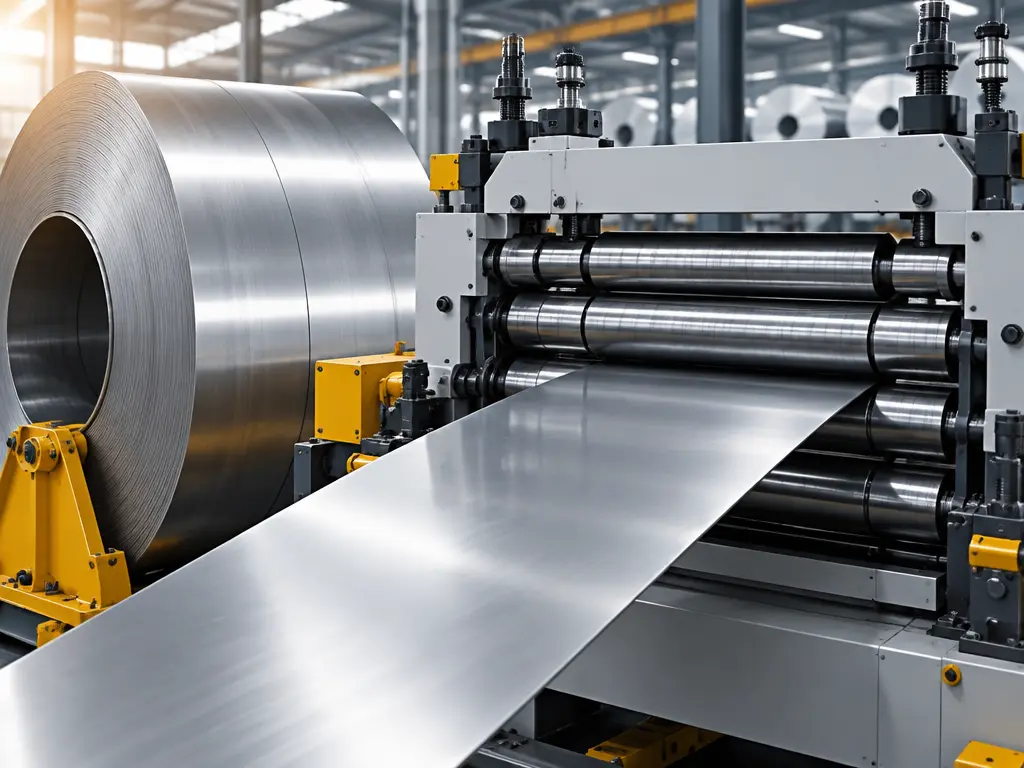
Every coil of steel, aluminum, or stainless that arrives at your factory has one thing in common: it’s curved. This coil-set — the residual curvature from being wound — must be removed before the strip enters your press. That’s where a coil leveler (also called a straightener or leveling machine) comes in.
Skip the leveling step, and you’ll see mis-feeds, die misalignment, inconsistent part dimensions, and accelerated die wear. However, get the coil leveler right, and your feeder and press can do their jobs properly. For background on the forming process, see Wikipedia’s stamping article.
Why Coil-Set Makes a Coil Leveler Essential
When strip material is wound into a coil, the outer layers are under tension and the inner layers under compression. Over time, this creates a permanent curvature — the material “remembers” being round.
Feed curved strip into a progressive die and, as a result, several things happen:
- The strip lifts off the die surface between pilots
- Feed length becomes inconsistent because the strip isn’t flat against the rollers
- Die pilots see uneven loading, increasing wear
- Finished parts may have spring-back variation
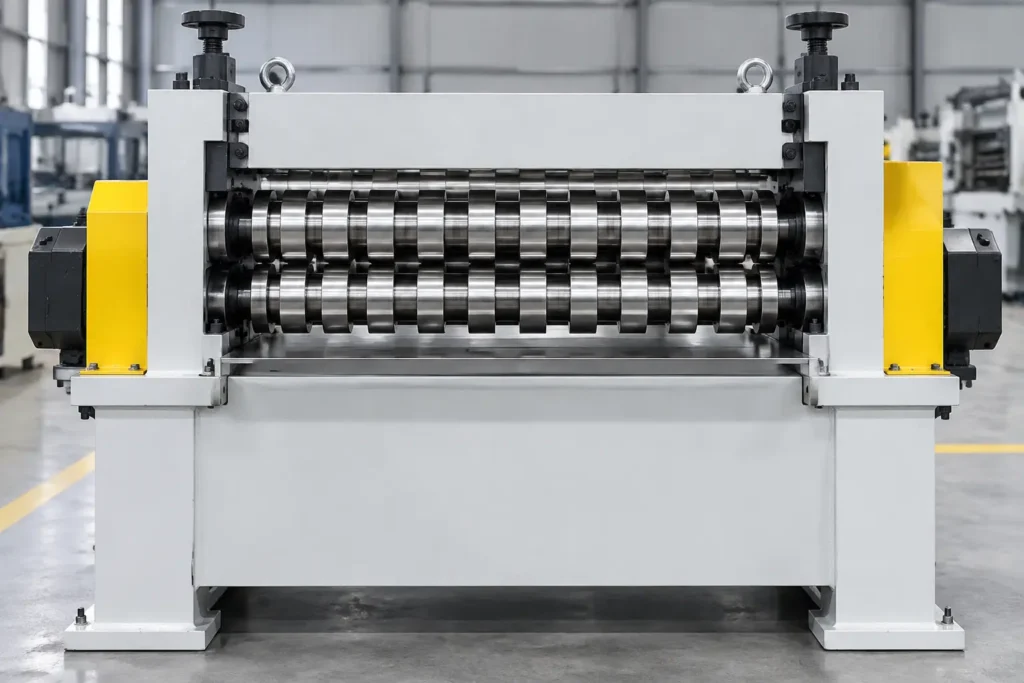
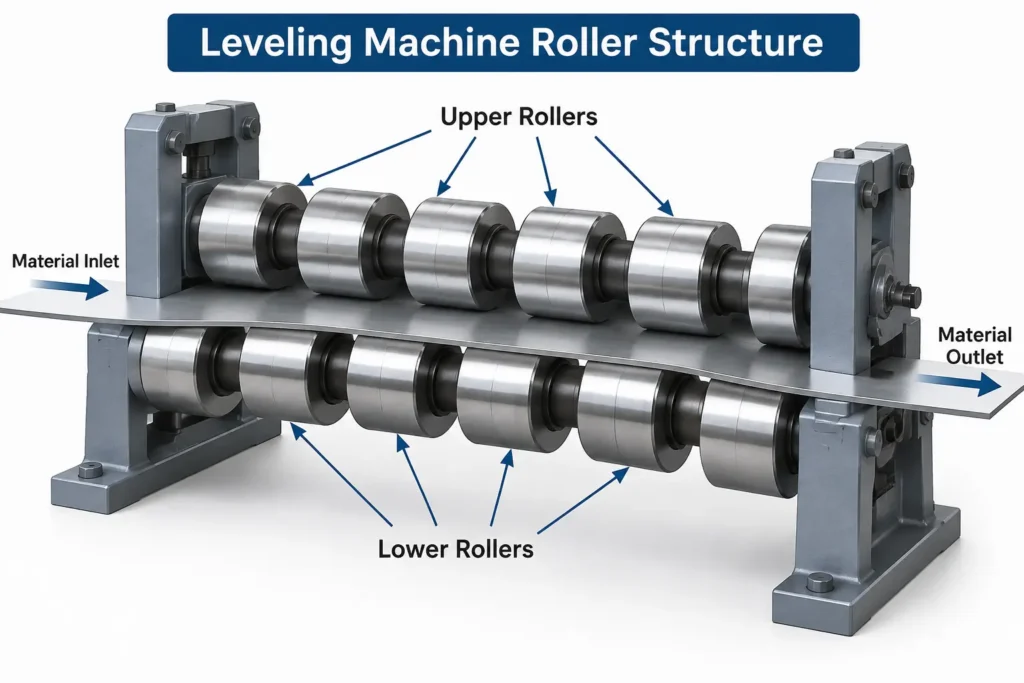
A proper leveler breaks this memory by reverse-bending the strip through a series of rollers. Each roller applies incremental bending, progressively reducing the curvature until the strip exits flat. In other words, a coil leveler actively corrects the material, rather than simply pressing it flat once.
Types of Coil Levelers and When to Use Each
Precision Levelers
For thin to medium gauges (0.2–3.2mm) in general stamping applications. These use multiple small-diameter leveling rolls arranged in a staggered pattern — typically 5 to 11 rolls — to deliver consistent flatness.
Jingcui’s precision roller levelers use an 11-roll configuration (6 upper / 5 lower) with independently adjustable upper roll bank. This configuration handles 90% of general stamping applications, from appliance panels to automotive brackets.
Heavy Plate Levelers
For thick material (3.0–6.0mm+), you need larger roll diameters, heavier frames, and more motor torque. The leveling principle is the same, but, in contrast, the forces are much higher.
Jingcui’s heavy plate levelers are designed for structural stamping applications — truck frame brackets, heavy machinery components, construction hardware.
2-in-1 Decoiler Levelers
Combines coil holding and leveling in one machine. The coil sits on a mandrel, and the strip feeds directly into the leveling cassette. Consequently, this saves floor space by eliminating the separate decoiler-to-leveler material loop.
Ideal for: shops with limited space, moderate coil sizes (up to 5 tons), and standard material grades. Browse our decoiler straighteners category.
Key Coil Leveler Specifications
When evaluating a coil leveler for your application, look at these parameters:
| Spec | What It Tells You | Typical Range |
|---|---|---|
| Number of rolls | More rolls = better flatness, especially for thin material | 5–21 rolls |
| Roll diameter | Smaller diameter = tighter reverse bending (better for thin stock) | 20–60mm |
| Backup rolls | Support behind work rolls to prevent deflection on wide material | Required for >400mm width |
| Material thickness range | Must cover your full production window | 0.2–6.0mm |
| Material width range | Must cover your widest strip | 100–1300mm |
| Yield strength capacity | Higher values needed for HSS and stainless | 245–590 N/mm² standard |
| Adjustment method | Manual (handwheel) or motorized (faster changeover) | Both available |
💡 Pro tip: Always check the leveler’s performance at your maximum combination of thickness × width × yield strength. A leveler that handles 500mm width at 1mm mild steel may not handle 500mm at 3.2mm stainless. Ask the manufacturer for the complete operating envelope.
Coil Leveler Roll Materials
Not all leveling rolls are created equal. The roll material and surface treatment significantly affect both performance and longevity.
Standard: GCr15 bearing steel, hardened to HRC 58–62, with precision grinding. Good for general cold-rolled steel and aluminum.
Premium: Hard chrome-plated rolls on GCr15 substrate. Better surface finish, longer life, and improved corrosion resistance — worth the upgrade for stainless steel and coated materials.
At Jingcui, all leveling rolls are precision-ground GCr15 bearing steel with hard chrome plating as standard on our precision leveler series.
How to Match a Coil Leveler to Your Production
The leveler selection process follows a logical flow:
- Define your material window — Min and max thickness, min and max width, material grades
- Determine flatness requirement — How flat does the strip need to be for your dies?
- Check throughput — Does the leveler’s line speed match your press speed?
- Verify coil handling upstream — What coil weight, ID, and OD will the leveler see?
- Confirm floor space — Standalone leveler or 2-in-1 configuration?
For most shops, a precision leveler with 11 rolls handles the full range. Only add heavy plate leveling if you consistently run >3.2mm material.
Coil Leveler Maintenance Essentials
Levelers are mechanically straightforward but require regular attention:
- Clean the rolls weekly — dirt and metal fines embed in the roll surface and transfer to your strip
- Check roll parallelism monthly — uneven roll gaps cause one-side waviness
- Lubricate adjustment mechanisms — hand-wheel threads and lead screws should move freely
- Inspect backup rolls — if they stop turning freely, they’ll flat-spot
A well-maintained coil leveler runs 10+ years without major repairs. However, neglect the rolls, and you’ll start seeing quality issues within months.
Jingcui Leveling Solutions
At Jingcui Automation, we offer a complete range of leveling equipment for stamping applications:
- Precision Levelers: 11-roll configuration (6U/5L), 0.3–3.2mm thickness, up to 800mm width
- Heavy Plate Levelers: For 3.0–6.0mm thickness applications
- 2-in-1 Decoiler Levelers: Combined decoiling and leveling in one frame
- 3-in-1 Compact Lines: Decoiler + leveler + servo feeder integrated (see our 3-in-1 guide)
All our levelers are manufactured at our 22-year-old factory in Shunde, Foshan — the heart of China’s stamping automation industry cluster. Our engineering team can verify the right leveler configuration for your specific material and production requirements.
Frequently Asked Questions
What does a coil leveler do?
A coil leveler removes coil-set — the residual curvature from material being wound — by reverse-bending the strip through a series of rollers, so it feeds flat into the press. Without it, curved strip causes mis-feeds and die wear.
What’s the difference between a leveler and a straightener?
The terms are used interchangeably in the stamping industry. Both refer to a machine that flattens coil or strip material through roller reverse-bending. A “precision leveler” usually implies more rolls and tighter flatness for thin gauge.
How many leveling rolls do I need?
More rolls generally mean better flatness, especially for thin material. A typical coil leveler has 5–11 rolls; Jingcui precision levelers use an 11-roll configuration (6 upper / 5 lower), which handles most general stamping.
How thick can a coil leveler handle?
Standard precision levelers handle 0.2–3.2mm; heavy plate levelers cover 3.2–6.0mm and above. Match the leveler to your thickest, widest, and strongest material — not your average job.
How often should I maintain a coil leveler?
Clean rolls weekly, check roll parallelism monthly, and lubricate adjustment mechanisms regularly. A well-maintained leveler lasts 10+ years. For how levelers fit into a full line, see our stamping automation line guide.
Need help selecting the right leveler for your material?
Contact Jingcui Automation with your strip thickness, width, material grade, and press speed. We’ll recommend the correct leveler model and verify performance for your application.
📞 WhatsApp: +86 133 6064 4989 | 🌐 jingcuiautomation.com


Leave a Reply